
Camel Spider
20,000+ 5-STAR REVIEWS
“Connors Trader went the extra mile to make sure he listened to our needs regarding the ant problem we had.”
- Larry
“He sprayed indoors and out, swept my eaves for spider webs and took care of a couple of wasp nests.”
- Rick
“He even sprayed on my deck, which no one else has done.”
- Sue
What is a camel spider?
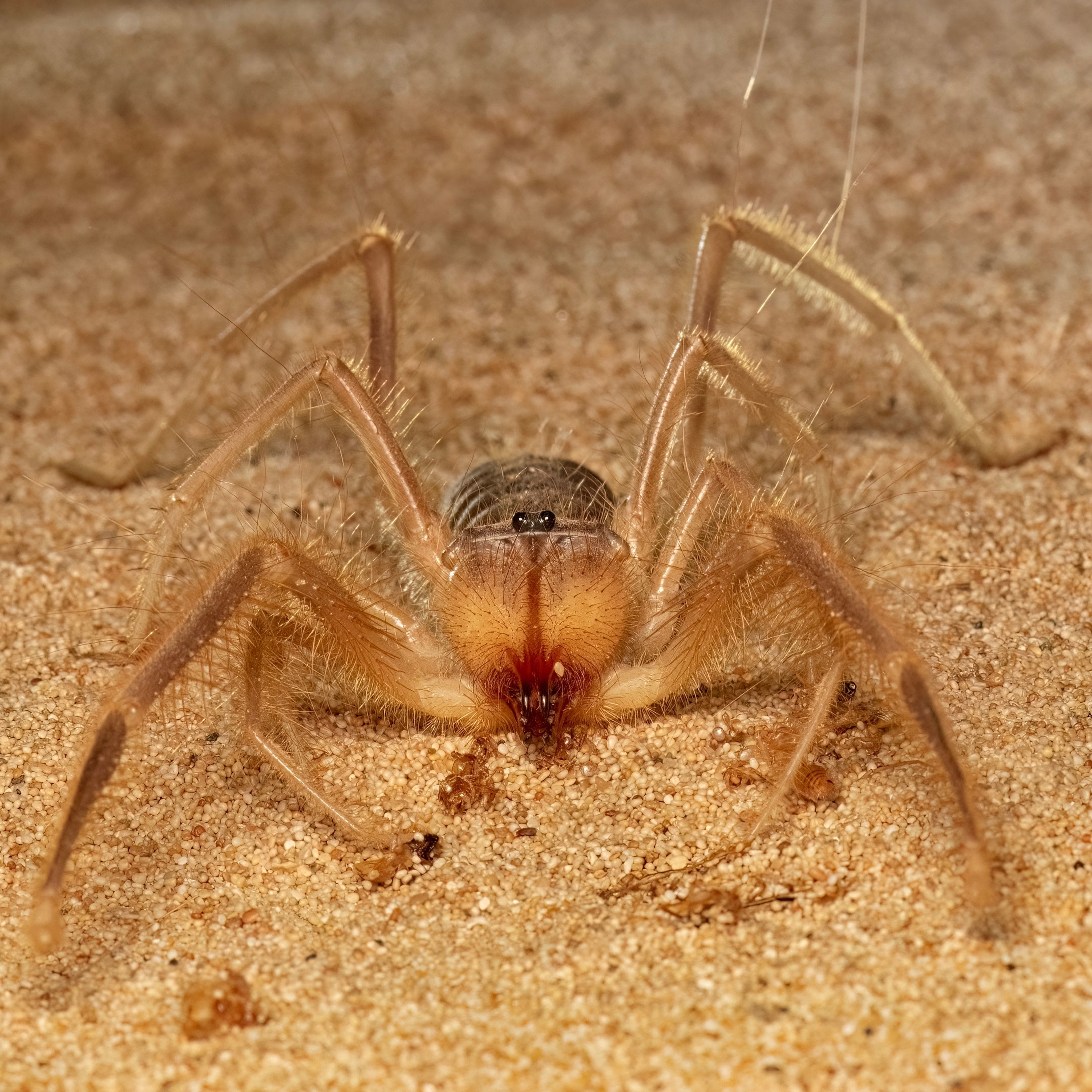
Camel spiders are among the most misunderstood arachnids. Between their colorful nicknames and stories about their extreme speeds and a prevailing fear that they like to stalk humans, we have a lot to cover.
Also known as Solifugae, sun spiders, and wind scorpions, camel spiders are neither true spiders nor scorpions. With no venom glands or web-producing ability, camel spiders rely on high-speed attacks and powerful jaws to take down prey.
While their bites can be painful, they aren’t dangerous to humans. However, spotting a camel spider in your home might indicate a larger pest problem. Separating camel spider facts from myths can help you get rid of camel spiders in your home.
What do camel spiders look like?
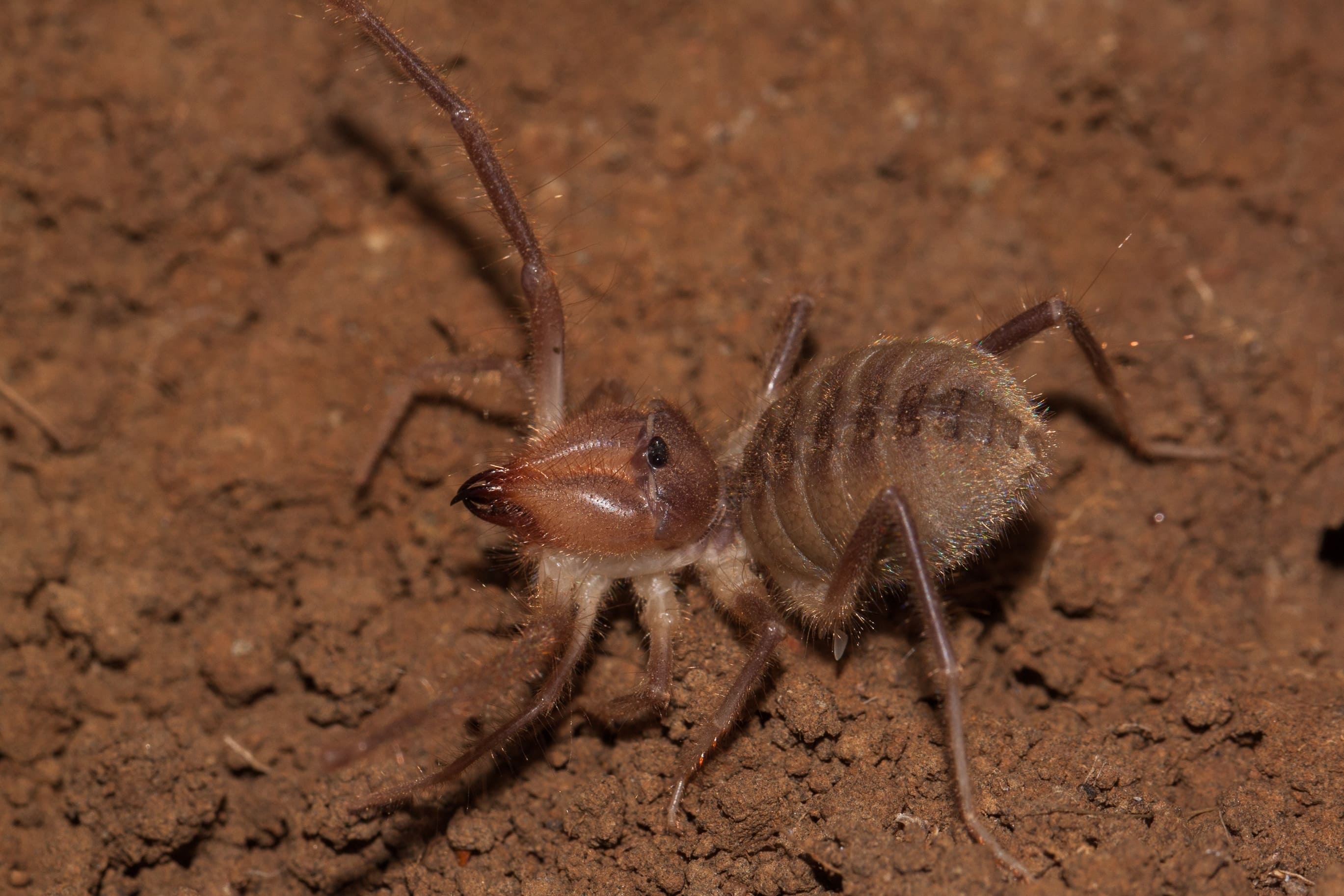
Camel spiders are typically tan, beige, brown, reddish, or dark brown to blend in with their desert environment. Their bodies and legs are covered in tiny hairs that insulate them from desert heat and detect vibrations in sand.
Their most recognizable feature is their jaws (chelicerae), which can make up a full third of their body length. These scissor-like pincers have sharp spines that grip, cut, and grind food. True spiders, on the other hand, have venomous fangs on their chelicerae.
Camel spiders have eight legs but are often thought to have 10 because of their pedipalps—long appendages that extend from the front of their bodies to find and grasp prey.
Because there are over 1,000 species, the size of camel spiders will vary. The largest camel spiders in the world, like Galeodes arabs and Solpuga spp. are found in the Middle East and Africa, and can span up to 6 inches, including legs. In North America, the most common family is Eremobatidae, which is usually between 2–3 inches long.
What are some camel spider behaviors?
Camel spiders are found in desert and semi-desert regions, such as the Southwestern US. Because they’re sensitive to cold weather, they’re mostly seen during the spring and summer. But they also hate intense heat, so they dig burrows beneath rocks, in cracks, under logs, or in other shady locations.
This love of shade leads to one of the big myths about camel spiders: that they stalk or follow humans to attack or bite them. In reality, they are chasing our shadows to escape the hot desert sun.
Another popular camel spider myth is that they can run up to 30 miles per hour. It’s true that they are quite fast due to their light weight and long legs, but camel spider speed tops out at 10 miles per hour. That’s faster than most humans jog!
Camel spiders are nocturnal hunters, but unlike true spiders, they can’t spin webs to catch prey. Instead, they use their speed to pursue prey in open areas. Lacking venom, they rely on their powerful jaws to capture and consume prey, including beetles, wasps, termites, scorpions, spiders, ants, and even small vertebrates (though this is uncommon).
Camel spiders typically live up to one year in the wild.
Do camel spiders go inside homes?
One difference between camel spiders vs. spiders like daddy longlegs (Pholcus phalangioides) and house spiders (Parasteatoda spp., Theridiidae) is that camel spiders prefer to be outside. However, they may follow prey indoors or be attracted by artificial light at night. They typically enter through gaps near doors and windows, cracks in foundations and walls, or vents and utility openings.
Once inside, camel spiders will hunt for available insects and arthropods or seek dark, sheltered areas. If they’re disturbed, they will usually attempt to find a way back outside. Camel spiders don’t establish permanent infestations or breeding colonies in homes.
Are camel spiders harmful to humans?
Because of the myths surrounding these efficient hunters, many people wonder if camel spiders are poisonous or otherwise dangerous. The short answer is no. Camel spider bites are rare. They may bite if they feel threatened, for example, if you attempt to pick them up. But they’re more likely to just run away.
Their bites aren’t venomous but do often hurt because of camel spiders’ powerful jaws. This can lead to swelling and irritation that typically resolves in a few days.
Are camel spiders hard to get rid of?
Camel spiders are generally not difficult to get rid of because they don’t breed indoors. Even though camel spiders are fast, you can use sticky traps or containers to catch and remove them from your home without risking a bite.
To prevent camel spiders from entering your home, seal entry points around doors, windows, vents, and foundation cracks. Maintain your yard to reduce shelter sites and reduce clutter indoors, particularly in basements, attics, and garages. You can also modify outdoor lighting, which attracts nocturnal camel spiders and their prey.
If you see multiple camel spiders (or other pests), it may signal a deeper pest issue around your home. That’s when it makes sense to bring in a professional team like Hawx.
We begin with a full property inspection, followed by perimeter and foundation treatments, including crack‑and‑crevice sealing, barrier establishment, and targeted yard and landscape work. If the pests return between treatments, we’ll come back to you at no additional cost. In short: inspection, tailored treatment, and a backed‑by‑warranty approach make sure the job is done, and stays done.
Read more about spiders
How to Identify & Get Rid of Spider Egg Sacs
Finding spider egg sacs around your home is unsettling, and many people aren’t sure what to do about it. While it’s true that spiders help

How to Get Rid of Spiders in Your Bedroom
Key takeaways on how to keep spiders out of the bedroom: You may have spiders in your bedroom because they like quiet, undisturbed corners and

Found a Black and White Spider? Here’s What it Probably Is
Picture this: you’re tidying up your home, minding your own business, when suddenly, you spot a tiny creature scurrying across the floor. It’s black and